

Coulda, woulda, shoulda …
The Ache of Anticipatory Grief

Editor’s note: I missed last week! I was elbows deep in Fast CAT photos but I at least have my sports shot for Unleashed’s Empower challenge. #IYKYK
I get down on the floor beside her.
I run my hand over her fur. Her soft, gentle eyes look back at me. All the trust. All the love. And somehow my brain fast-forwards – past now, past this moment, into the place where she isn’t here anymore.
The tears fall.
And I feel like I’m betraying her.
Because I think she knows why I’m crying. And I don’t want to put that on her.
So I leave.
I’ve been filling my calendar the way some people fill silences – compulsively, completely, with anything that will hold the space.
Booking modelling sessions.
Scheduling shoots.
Planning ahead.
Staying useful. Staying busy.
Always something on the horizon that requires my attention right now.
I told myself it was momentum. That’s what it looks like from the outside, anyway.
But I figured something out recently. It isn’t momentum. It’s avoidance. I am manufacturing reasons to not be in the room with her. And when I am in the room with her, I am sometimes so consumed by where this is going that I’m not actually there at all.
That’s the trick anticipatory grief plays. It doesn’t just ask you to grieve the future. It colonizes the present.
What I thought I knew
Three years ago, I recorded a podcast episode called “The Art of Coulda, Woulda, Shoulda.”
I talked about guilt and grief. Specifically, I referenced the guilt I still feel over Shep’s last days and not noticing that he was failing physically. I left him to get to a state where his organs had shut down and his heart was ready to explode.
I quoted studies. I cited experts.
I explained why self-blame complicates bereavement, why we would rather feel guilty than helpless, and what the research says about how guilt shapes the course of grief.
The information was good. The research was sound.
But I was standing on the shoreline. I hadn’t been hit by the wave yet.
At the time, I thought I understood anticipatory grief because I had studied it. I was a grief educator. I had credentials. I studied under David Kessler and Coleen Ellis. I was talking to pet guardians every week about love and loss and saying goodbye. I thought that counted as knowing.
What I know now is that understanding something and living inside it are two very different things.
Three years ago, Bella was healthy.
Today she is 12 with an aortic thrombosis. In common terms, that’s a blood clot on her heart.
And I can tell you from inside the wave: Anticipatory grief isn’t just sadness before a loss. It isn’t the forward shadow of sorrow. It’s the constant ache of loving someone who is still here, while your brain keeps rehearsing a world where she isn’t.
What I got wrong
Here’s what I got wrong in that episode – not factually, but experientially.
The guilt I described was mostly retrospective. Could I have noticed sooner? Should I have gotten Shep to the vet earlier? Would things have been different if I’d made another choice? That’s the guilt that arrives after loss, the kind that keeps you up at 3 a.m. asking questions that have no answers.
But there’s another kind. The kind I’m living now.
Am I spending enough time with her? Am I making enough memories? Should I cancel that session and stay home? Should I take that trip while I still can? Should I be working right now, or should I be sitting on the floor beside her?
Every answer seems to create another question. And here’s the cruel part: Sometimes the answer to all of them is yes, I should be with her – and I still get up and leave the room, because I can’t stay without falling apart, and I don’t want her to carry my grief on top of her own body’s changes.
So I book another session. I find another thing to do. I manufacture distance and then feel guilty about the distance I’ve manufactured.
That particular loop isn’t in the research.
The ones who wander
What is in the research – and what I still believe, maybe more than ever – is this: We would rather feel guilty than helpless.
Kessler puts it plainly. If it’s my fault, then maybe I had control. If I had control, then maybe I could have prevented the loss. And if I could have prevented it, then maybe I don’t have to face the terrifying reality that some things were never mine to control in the first place.
That made intellectual sense to me three years ago.
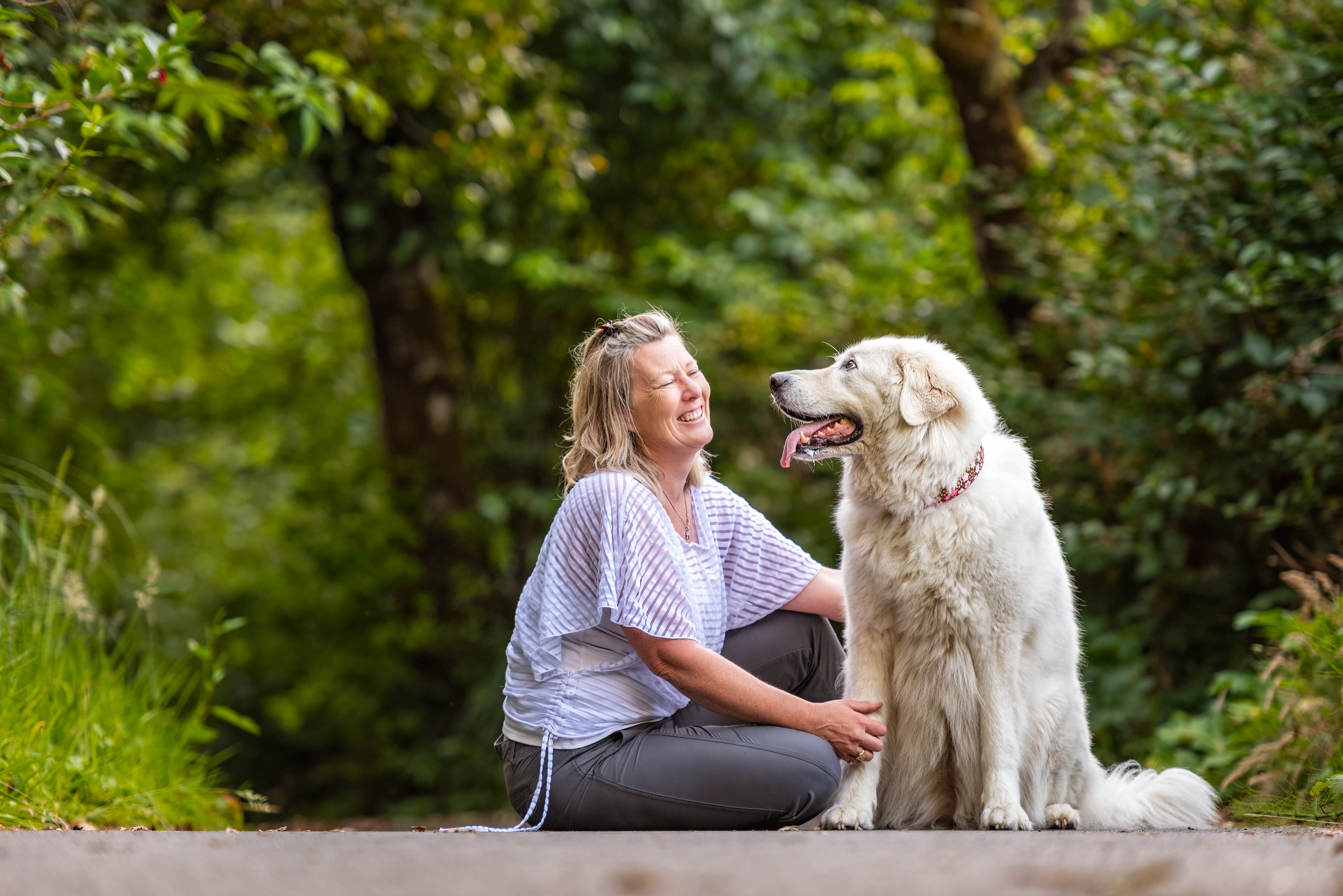
Now it lands differently. Because I can feel it happening in real time. The guilt I carry about not being present enough, about filling my calendar, about leaving the room – underneath all of it isn’t really guilt. It’s helplessness.
I cannot stop Bella from aging. I cannot negotiate with time. I cannot love her hard enough to make her immortal.
And so I find things to blame myself for instead. Because guilt, at least, implies agency. Guilt means I could have done something differently. Helplessness means I couldn’t. And helplessness is the harder thing to hold.
Dogs don’t have this problem.
Bella has never once worried about whether she’s maximizing her remaining days. She has never sat awake cataloguing the moments she missed. She does not think about what she should have done differently last Tuesday, or what next month might look like, or whether I’m going to be okay.
She knows I’m sad. She knows something is moving through me when I sit beside her. And she stays close anyway. Not because she’s managing my feelings. Because she’s a dog, and dogs live in the only place they’ve ever known: right here.
We are the ones who wander. Into the past with its shouldas, into the future with its what-ifs. Dragging ourselves out of the present moment and then feeling guilty for the distance we’ve put between ourselves and the ones we love.
What I know now
I don’t have a clean ending for this one.
I’m still in it. The calendar is still full. Some days I manage to stay on the floor long enough for the tears to pass and for something quieter to settle in – her breathing, the tickle of her fur against my leg, the ordinary miracle of her being here.
Some days I don’t make it that far.
What I know is that the guilt isn’t the enemy. It’s just fear wearing a different coat. And underneath the fear is love – the kind that doesn’t know what to do with itself when it can’t fix anything.
Coulda, woulda, shoulda.
It gets us nowhere. But I understand now why we go there anyway.
One thing we can do today
When the wave hits, our instinct is to fight it or outrun it.
The next time it hits, don’t try to fix it or analyze it.
Sit down beside your dog. Put one hand on your chest and one hand on her.
Feel the rise and fall beneath your palm. The warmth of her body. The steady rhythm of a heart that is still here.
Then breathe.
Inhale slowly through your nose for a count of four. Hold for four.
Exhale through your mouth for six.
Do it again.
Not to calm down. Not to make the grief disappear. Just to remind yourself where you are.
Because anticipatory grief is always trying to pull us somewhere else – into the future, into the loss, into all the days that haven’t happened yet.
Your dog is here.
Her fur is here.
Her breath is here.
The weight of her head against your leg, the sound of her sigh, the warmth of her body beside yours.
Here.
For one moment, let that be enough.
The Ache of Anticipatory Grief arrives free in your inbox every Sunday. Paid subscribers receive midweek stories on dog photography, pet loss grief and the beautifully messy experience of loving dogs through every stage of life. You can also support Cameras and Canines at buymeacoffee.com.
That is so beautiful! Without a crystal ball, the most meaningful thing we can do is be with them wholeheartedly, in body and soul.